Social media planning
A Simple Social Media Content Plan for a Small Business
Build a manageable social media content plan with customer questions, service examples, a weekly schedule and a simple way to review enquiries. This guide offers a practical starting point; adapt the details to the way your business works.
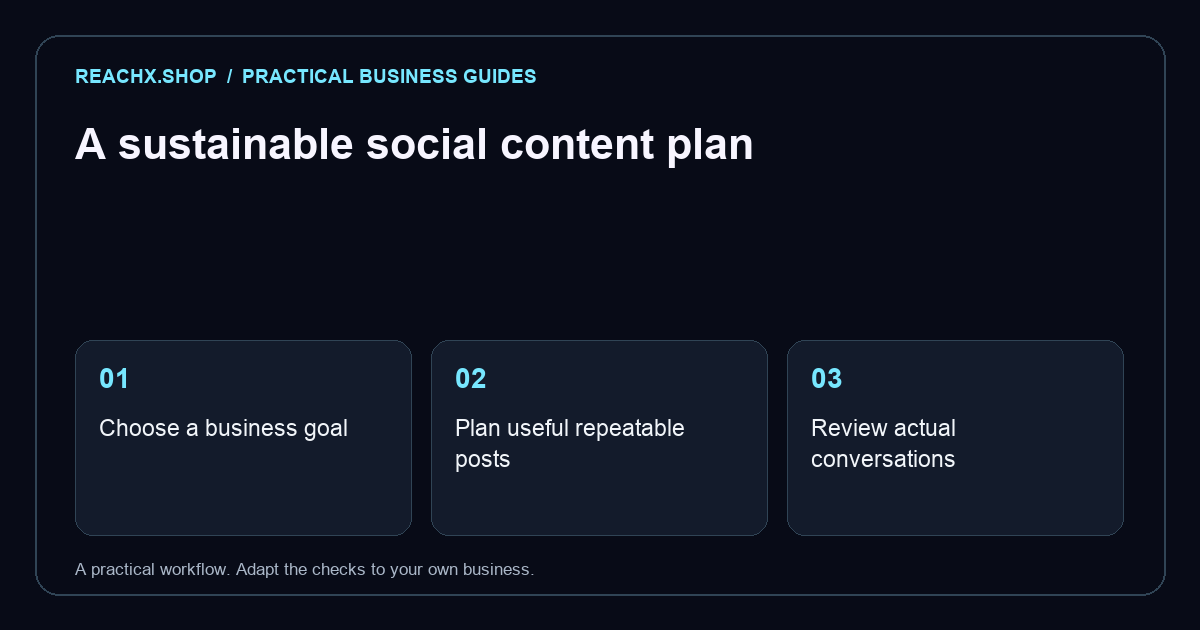
Choose one business goal first
Before planning posts, decide what you want social media to help with. A local service business might want relevant enquiries. A shop might want customers to understand its products before visiting. A new business might need a clear introduction to what it offers.
Choose a platform where you can reach your intended customers and realistically maintain the account. Being active everywhere can create more work without a clear purpose. Look at the questions customers already ask in calls, messages and meetings. Those questions are a useful starting point for content.
Use three repeatable types of post
Start with customer questions, explanations of your service and genuine examples of your work. These give the page a useful mix without requiring a completely new idea every day. For a website business, that could mean answering what content a client needs, explaining a landing page and showing a permitted example of a finished page.
Keep examples accurate. Ask permission before sharing client names, screenshots or messages. Label demonstrations as demonstrations. Avoid presenting a sample design as a paid project or claiming that a post generated sales when you have not measured that result.
Try a small weekly schedule
The schedule below is an example to adapt, not a minimum requirement or a promise of better reach. If three posts are too much, publish fewer useful posts and keep the information current.
| Day | Post idea | Useful next step |
|---|---|---|
| Monday | Answer one common customer question. | Link to a relevant explanation or invite a specific question. |
| Wednesday | Explain one service or product detail. | Help the reader decide whether it suits their need. |
| Friday | Share a genuine example or a practical tip. | Show how to enquire or explore the work. |
Keep a simple list with the topic, draft, image, publish date and person responsible. Reuse a useful idea in a different format when it adds clarity; avoid posting the same sales message repeatedly.
Make each post easy to understand
Introduce one idea, explain it in familiar language and give the reader a sensible next step. Describe what an offer includes and avoid urgency that is not real. A short caption with a clear example often needs less effort from the reader than a paragraph filled with marketing terms.
Use readable text in images and captions for spoken video where practical. Check that the link or contact method works on a phone. Do not send everyone to the homepage if a specific service page answers their question better. Our contact page guide explains how to make that next step clearer.
Review conversations as well as views
After a few weeks, review which posts led to useful questions, relevant website visits or enquiries. Keep the measurement modest: a small number of interactions cannot reliably prove that one format is always better. Likes can show a response, but they do not automatically mean customers are ready to buy.
Ask new customers how they found you and record the answer when appropriate. Use those conversations to choose the next month’s questions and examples. If you want help building a manageable plan, explore Reach X’s social media marketing services. The goal is a useful, sustainable presence supported by a clear business offer.